Cordyceps
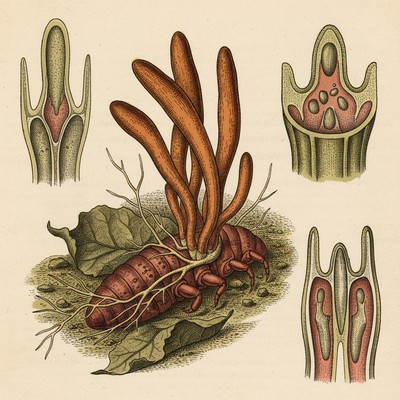
Cordyceps sinensisCordyceps is a unique fungus that naturally grows on caterpillars in high altitude regions of Tibet and China (though most supplements today are cultivated vegetatively). It has been a part of Tibetan and Chinese medicine for centuries, traditionally used to boost stamina, libido, and lung health. Cordyceps gained fame in the West in the 1990s when Chinese Olympic athletes credited it for their enhanced performance and quicker recovery. It's considered an adaptogen and is used to support energy production and endurance, partly by helping the body utilize oxygen more efficiently. Cordyceps also supports immune function, but its energizing quality is what it's most known for—sometimes called "the tonic for those who need a push."
Traditionally used for
- Support energy, stamina, and athletic performance
- Support immune system function and vitality
- Support respiratory function and oxygen utilization
Quick facts
Pairs well with
Common questions
Can you mix cordyceps and reishi?
Cordyceps provides the energizing side of this pairing. It is traditionally used to support energy and stamina, while reishi is traditionally used to encourage calm and support restful sleep. Both belong in the immune category. Reishi tastes much more bitter, so use less at first and allow the milder mushroom to remain underneath. A blend carries every caution attached to either one: immunosuppressants, blood thinners, autoimmune conditions, bleeding disorders, reishi's blood pressure note, and cordyceps' warning for pregnancy and breastfeeding.
Can you mix cordyceps and astragalus?
Yes. Among the three herbs paired with cordyceps, astragalus is its closest match. Both are traditionally used to strengthen immune function and support energy. Their flavors are similar enough for equal parts without either one overwhelming the other. Both herbs are flagged for autoimmune conditions and immunosuppressant medications, so the same cautions apply. Their timing differs. Astragalus is traditionally used for prevention, not during an acute illness.
Can you mix cordyceps and ginseng?
Save this combination for the morning. Both herbs are traditionally used to support energy and stamina, but their other uses differ. Ginseng is traditionally used to support mental clarity and fatigue, while cordyceps is traditionally used to support athletic performance and efficient oxygen use by the body. Neither is suitable during pregnancy or breastfeeding, and both have blood sugar cautions. Ginseng also has its own timing rules: avoid evening doses and continuous long-term use. It is also the more bitter part of the cup.
What does cordyceps taste like?
Cordyceps is mild, earthy, and slightly sweet. Compared with woody, distinctly bitter reishi, Cordyceps sinensis is easy to drink. Its mild flavor usually rests beneath the other herbs in a blend instead of covering them. Many people do not taste it at all because capsules and tinctures are both common ways of taking it.
How do you take cordyceps?
Capsules and tinctures are the most common options, but cordyceps also works well in tea or a decoction simmered for longer. It has appeared in Tibetan and Chinese medicine for centuries, though you should not expect it beside ordinary supermarket teabags. Look in specialty stores instead. It helps to know what you are buying: wild cordyceps grows on caterpillars high in the mountains of Tibet and China, while most supplements available today are cultivated vegetatively.
Is cordyceps good for sleep?
Not especially. Cordyceps belongs in the energy and immune categories. It is traditionally used to support stamina, athletic performance, immune function, and respiratory health, none of which suggests sleep. Its reputation actually points in the opposite direction, earning it the description "the tonic for those who need a push". For sleep, reishi is traditionally used to encourage calm and support restful sleep, and it blends easily with cordyceps.
Who should avoid cordyceps?
People who are pregnant or breastfeeding should avoid cordyceps. It is also unsuitable for anyone with an autoimmune condition and may interact with immunosuppressant medications. Blood thinners are another main interaction, while bleeding disorders require additional caution. Cordyceps may affect blood sugar too, so anyone using medication to manage it should consult a healthcare provider first.
Safety
May interact with immunosuppressant medications and blood-thinning medications. Avoid with autoimmune conditions. Use caution with bleeding disorders. May affect blood sugar. Avoid during pregnancy and breastfeeding.
These statements have not been evaluated by the Food and Drug Administration. This information is not intended to diagnose, treat, cure, or prevent any disease. Always consult a qualified healthcare provider before using herbs, especially if you are pregnant, nursing, taking medication, or have a medical condition.
More from the herb library
Blend Cordyceps in the Yarrow app
Browse 100 herbs, build your shelf, and create blends from what you have.
100% Ad-Free · Some features require premium