Ginseng
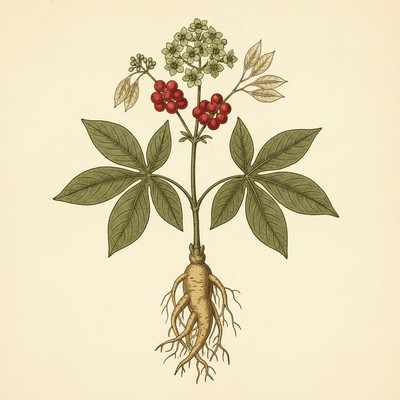
Panax ginsengPanax ginseng, also sold as Asian or Korean ginseng, is among the most valued roots in traditional Chinese medicine. The finest specimens have been worth their weight in gold. Its Latin name reflects that reputation: Panax shares a root with panacea and means all-heal. As an adaptogen, it is traditionally used to support energy and stamina, mental clarity, and the body's ability to cope with stress. Caffeine provides a quick lift, while ginseng's energy develops more slowly and centers on endurance. Its potency deserves respect. Red Korean ginseng and wild Manchurian root can be very stimulating. Taking too much may bring nervousness, a racing heartbeat, or poor sleep, especially for people with a naturally hot constitution. Herbalists therefore begin with small amounts, avoid evening use, and recommend breaks, often 2-3 weeks on, 1 week off. American ginseng, Panax quinquefolius, is the slightly cooler, milder cousin, more yin-nourishing, and may suit those who find Asian ginseng too heating.
Traditionally used for
- Support energy, stamina, and reduce fatigue
- Support mental clarity and cognitive performance
- Support overall vitality and healthy aging
Quick facts
Pairs well with
Common questions
Does ginseng affect sleep?
It can, although usually not in the way people seeking it might hope. Ginseng is traditionally used to support energy and stamina, so herbalists caution against evening doses because the root can be overstimulating. Too much, or a particularly potent red Korean root, may bring nervousness or a racing heartbeat along with a poor night's sleep. People with a naturally hot constitution often notice these effects first.
What is the difference between American ginseng and Korean ginseng?
They share a genus but differ in temperature. Panax ginseng is the Asian or Korean root, while Panax quinquefolius is the American one: slightly cooler, milder, used in much the same way, and more yin-nourishing in traditional terms. People who find Asian ginseng too heating often prefer it. Red Korean ginseng lies at the most stimulating end of the range, an important detail when an extract is labeled only as ginseng.
What is ginseng used for in traditional Chinese medicine?
In Chinese medicine, ginseng is considered a powerful Qi tonic. It is described as tonifying both Qi and Yang, meaning the body's energy and warmth. It is traditionally used to support energy, stamina, mental clarity, and vitality into old age. The finest roots have been worth their weight in gold, reflecting their high standing within the tradition. Less is still more, and ginseng is taken in courses with breaks instead of continuously.
Can you mix ginseng and rhodiola?
These are two stimulating roots, so timing matters more than the proportion used. Both are traditionally used to support energy and mental performance, and both are best taken in the morning. Rhodiola may interfere with sleep, while ginseng can become overstimulating later in the day. Their combined flavor is quite bitter, with rhodiola contributing an astringent, lightly rose-scented note. On its own, rhodiola may cause jitteriness in sensitive people. Neither suits pregnancy or breastfeeding, and both have cautions involving blood pressure and blood sugar.
Can you mix ginseng and schisandra?
Yes. Their traditional roles overlap in important ways. Both relate to energy and focus, and both are traditionally used to support stamina and mental clarity during long periods of work. Schisandra brings an unusual flavor: its berries taste salty, sweet, sour, bitter, and pungent at once, alongside ginseng's earthy bitterness. Starting with equal parts is reasonable. Neither suits pregnancy or breastfeeding. Both have blood-thinning cautions, while schisandra may interact with medications processed by the liver.
How do you make ginseng root tea?
Simmer the root rather than simply steeping it. Because ginseng is a root, preparing a decoction, with the root kept at a simmer, draws out more than pouring hot water over it in a mug. The resulting tea tastes bitter and earthy, with a subtle sweetness beneath those flavors. Make it in the morning, not after dinner. If you dislike the taste or preparation, tinctures and capsules are standard alternatives, and ginseng root is widely available.
Who should avoid ginseng?
Pregnancy and breastfeeding are the clearest reasons to avoid ginseng. It may interact with blood-thinning medications, including warfarin, as well as blood sugar medications, immunosuppressants, and stimulants. A heavy coffee habit also matters here. Ginseng may affect blood pressure, so anyone whose blood pressure is not under control should use care. It should not be taken continuously. Traditional practice favors courses with breaks, and excessive amounts may cause nervousness, a racing heart, and poor sleep. Speak with your healthcare provider before beginning.
Safety
May interact with blood-thinning medications, diabetes drugs, immunosuppressants, and stimulants. Avoid during pregnancy and breastfeeding. May affect blood pressure and blood sugar. Can cause overstimulation; avoid evening doses. Not for continuous long-term use.
These statements have not been evaluated by the Food and Drug Administration. This information is not intended to diagnose, treat, cure, or prevent any disease. Always consult a qualified healthcare provider before using herbs, especially if you are pregnant, nursing, taking medication, or have a medical condition.
More from the herb library
Blend Ginseng in the Yarrow app
Browse 100 herbs, build your shelf, and create blends from what you have.
100% Ad-Free · Some features require premium