Green Tea
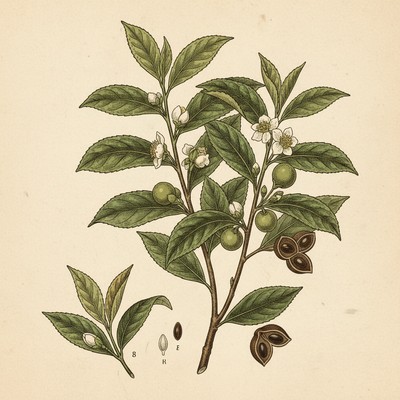
Camellia sinensisGreen tea is made from the leaves of Camellia sinensis and has been consumed in China, Japan, and other parts of Asia for thousands of years. Because it's minimally processed (unlike black tea), green tea retains high levels of catechins and other antioxidants which contribute to its health benefits. It's traditionally used to provide a gentle energy lift and improve alertness due to its moderate caffeine content, but also to support metabolism and weight management. Green tea has been associated with cardiovascular benefits and healthy aging—it's a staple of many longevity diets. However, because of its caffeine, it is best consumed in moderation by those sensitive to stimulants.
Traditionally used for
- Support mental clarity and gentle, sustained energy
- Support metabolic health and weight management
- Support cardiovascular wellness and healthy aging
Quick facts
Pairs well with
Common questions
Can you mix green tea and ginger?
Yes. Ginger appears on green tea's pairing list. Its spicy, warming flavor has a citrus edge, so rather than blending into the grassy, vegetal base, it cuts through it. Ginger is traditionally used to ease nausea and to warm the body, a different role from green tea's focus and energy. Begin with less ginger because it is the stronger one. Both may interact with blood-thinning medications, while ginger may also lower blood sugar.
Can you mix green tea and peppermint?
Their traditional uses do not overlap. Green tea belongs under focus and energy, while peppermint belongs under digestion and respiratory, making this pairing more about flavor than anything else. It combines cool, intense mint with a grassy base that has some bitterness. Peppermint is bold, so equal parts is a reasonable starting point. Avoid concentrated peppermint if you have GERD, a hiatal hernia, or a gallbladder condition. Green tea can also be hard on an empty stomach.
Is jasmine green tea the same as regular green tea?
The leaf remains the same in both: Camellia sinensis, minimally processed, which preserves its catechins and fresh-leaf character. Jasmine is added over that foundation instead of replacing it. This means the caffeine is still present, along with its cautions, including those related to pregnancy and anxiety disorders. If you prefer to put the flavor together yourself, green tea's usual pairings are ginger, lemon and peppermint.
What does green tea taste like?
It tastes grassy and vegetal, with slight bitterness and a savory umami note underneath. Black tea has a different taste. Because green tea goes through less processing, it remains closer to its original leaf, catechins included. Many people simply do not enjoy the bitterness, which is usually why they choose a blend instead of drinking it plain.
Does green tea have caffeine?
Yes, it contains a moderate amount. Green tea is traditionally used to support mental clarity and gentle, sustained energy, with caffeine playing a role. But moderate is still meaningful. If you are pregnant, have an anxiety disorder, or use stimulants or blood pressure medication, caffeine is the main factor to consider. Drinking a cup on an empty stomach can also cause upset by itself.
Who should avoid green tea?
Most cautions come from the caffeine. During pregnancy and for people with an anxiety disorder, excessive amounts are the concern. Green tea may also interact with blood-thinning medications, stimulants and certain blood pressure medications. It may affect iron absorption too, which is more relevant if your iron is already low. Another practical point is that drinking it on an empty stomach can cause stomach upset. If any of these concerns apply to you, ask your healthcare provider.
Can you grow green tea in containers?
No. Camellia sinensis is not practical to grow in a container, so keeping a pot on your windowsill will not produce your own cup. It is only a small loss. Green tea is among the easiest herbs to purchase, available as loose or bagged leaf for tea and infusions, or in capsules if you prefer not to brew it.
Safety
Contains caffeine; avoid excessive amounts during pregnancy and with anxiety disorders. May interact with blood-thinning medications, stimulants, and certain blood pressure medications. May affect iron absorption. Can cause stomach upset on empty stomach.
These statements have not been evaluated by the Food and Drug Administration. This information is not intended to diagnose, treat, cure, or prevent any disease. Always consult a qualified healthcare provider before using herbs, especially if you are pregnant, nursing, taking medication, or have a medical condition.
More from the herb library
Blend Green Tea in the Yarrow app
Browse 100 herbs, build your shelf, and create blends from what you have.
100% Ad-Free · Some features require premium