Reishi
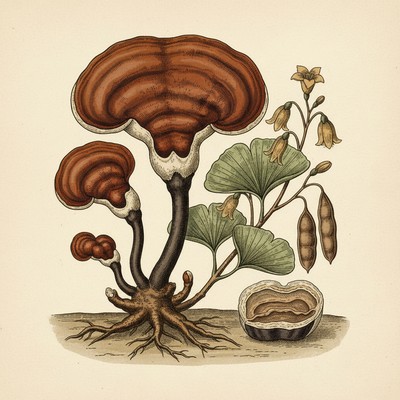
Ganoderma lucidumReishi is a woody mushroom often called the 'Mushroom of Immortality' in Chinese lore due to its revered status in promoting long life and health. For over 2,000 years, reishi has been used in East Asia as an immune modulator and a calming tonic. It helps the body resist stress, improve sleep, and generally acts as a harmonizing adaptogen. Reishi contains compounds like beta-glucans that support immune function, making it valuable for chronic immunity issues or for recovery after illness. Unlike stimulant adaptogens, reishi has more of a grounding, relaxing effect—people often describe feeling more balanced and resilient with regular use of reishi. Its taste is very bitter, so it's often taken as capsules or concentrated extracts rather than tea.
Traditionally used for
- Support immune system function and overall wellness
- Promote calm and support restful sleep
- Support healthy aging and vitality
Quick facts
Pairs well with
Common questions
How do you make reishi tea?
Simmer reishi rather than steeping it. Because it is a woody mushroom instead of a leaf or flower, the preparation that works is a decoction: keep sliced pieces at a low simmer in water rather than dropping them into a mug to sit. The result is bitter. For that reason, many people avoid the pot altogether and choose capsules or a concentrated extract.
Is reishi tea good for sleep?
Traditionally, yes, though the framing matters. Reishi is traditionally used to encourage calm and support restful sleep, and people in East Asia have taken it for over 2,000 years as a calming tonic. In Chinese lore, it is called the Mushroom of Immortality, a name reflecting how people regarded it rather than what it does. It is a grounding adaptogen, not a stimulating one. Blood pressure medication and blood thinners are both flagged as interactions, so check before making it a nightly habit.
What does reishi taste like?
It tastes woody, bitter, and earthy. Ganoderma lucidum is far from subtle in a cup, and most people underestimate its bitterness before drinking it for the first time. That is why capsules and concentrated extracts are so common, since many people prefer not to taste it. If you brew it, pairing it with something mildly sweet gives the cup somewhere to go.
What is a reishi tincture, and is it better than tea?
A tincture is a concentrated liquid taken by the drop instead of by the cup. Better is not the right measure. Tea, decoction, tincture, and capsules are all standard ways to take reishi, and choosing among them usually comes down to effort and bitterness. A tincture gets past the flavor in a second, while a decoction requires time over a pot. The cautions stay the same in every format, including those for blood thinners and blood pressure medication.
Can you mix reishi and cordyceps?
Yes, and the combination is common. Both are traditionally used to support immune function. Reishi does so through compounds like beta-glucans, while cordyceps provides the energy and stamina side that reishi does not. Their flavors are similar and earthy, although cordyceps is milder and slightly sweet beside reishi's bitterness. Begin with less of the stronger herb, which in this pairing is reishi. The cautions add together rather than cancel out: both are flagged for immunosuppressants, blood thinners, autoimmune conditions, and bleeding disorders. Cordyceps also has a pregnancy and breastfeeding warning.
Can you mix reishi and astragalus?
This pairing helps with flavor as much as anything else. Astragalus is mildly sweet and pleasant, giving reishi's bitterness something to rest against, and both are traditionally used to support immune function and vitality. Equal parts is a reasonable starting point. Astragalus carries a caution for acute illness, with traditional guidance suggesting that you hold off while one is active. Both herbs are also flagged for people with autoimmune conditions or those taking immunosuppressant medications.
Who should avoid reishi?
People taking blood thinners, immunosuppressants, or blood pressure medication should speak with a healthcare provider first because reishi may affect blood clotting and blood pressure. Stop taking it before surgery. Autoimmune conditions and bleeding disorders also belong in the caution column. Reishi is found in specialty stores rather than among supermarket teas, so most people first encounter it as an extract at a concentration selected by someone else.
Safety
May interact with blood-thinning medications, immunosuppressants, and blood pressure medications. Avoid before surgery. May affect blood clotting and blood pressure. Use caution with autoimmune conditions and bleeding disorders.
These statements have not been evaluated by the Food and Drug Administration. This information is not intended to diagnose, treat, cure, or prevent any disease. Always consult a qualified healthcare provider before using herbs, especially if you are pregnant, nursing, taking medication, or have a medical condition.
More from the herb library
Blend Reishi in the Yarrow app
Browse 100 herbs, build your shelf, and create blends from what you have.
100% Ad-Free · Some features require premium