Cinnamon
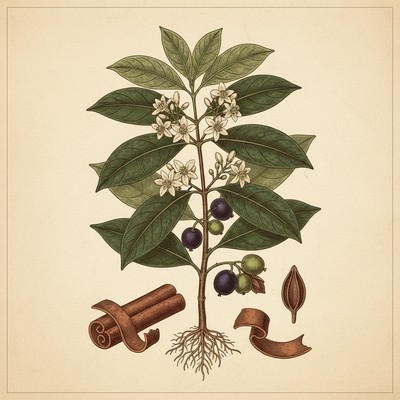
Cinnamomum verumCinnamon is among the oldest traded spices. Once worth more than gold, it traveled the routes linking East and West, and ancient Egyptians used it for embalming. Its main traditional role is digestive support. Cinnamon is traditionally used to relieve gas and bloating as a carminative, and to stimulate appetite and digestive fire, which may ease indigestion and cramping. This explains its place in many warming digestive teas. Cinnamon is also traditionally used to support healthy blood sugar balance, warm the body, and support circulation by bringing blood to cold extremities. Its oils are so strong that cooks once used it to prevent food from spoiling. Moderation is important. A small amount in food or tea is traditional, but very high doses and concentrated supplements can strain the liver.
Traditionally used for
- Support healthy blood sugar balance
- Ease digestive discomfort and support gut health
- Warm the body and support circulation
Quick facts
Pairs well with
Common questions
Can you mix chamomile and cinnamon tea?
Yes. The flavor pairing does much of the work. Chamomile's apple-like sweetness rests beneath cinnamon's warm spice, and the combination makes sense as soon as you smell it. They also share a digestive thread: chamomile is traditionally used to soothe digestive upset and stomach cramping, while cinnamon is traditionally used to ease digestive discomfort and support gut health. Cinnamon is much stronger, so begin with less of it. Because chamomile is in the daisy family, people who react to ragweed or chrysanthemums should avoid it. Both herbs may interact with blood-thinning medications.
Can you mix cinnamon and rooibos tea?
Rooibos names cinnamon among its partners, largely because of the flavor. Naturally sweet, smooth, and slightly nutty, rooibos gives cinnamon a sugar-free base that is already sweet, while cinnamon brings warmth. Cinnamon rooibos chai uses exactly this combination. Both are traditionally used to support digestive comfort. Large amounts of either can burden the liver: cinnamon at high doses, and rooibos through liver enzymes and medications processed there. Moderate rooibos is fine during pregnancy, but medicinal amounts of cinnamon are not.
Can you mix cinnamon and ginger?
This is a warming combination. Cinnamon and ginger are both traditionally used to warm the body, support circulation, and aid digestion, so their roles in the cup work together. Ginger contributes a pungent citrus note, while cinnamon brings sweetness. Equal parts are a practical starting point. Their cautions add together: both may lower blood sugar and may interact with blood-thinning medications. High doses of ginger should also be stopped before surgery.
Can you mix cinnamon and cardamom?
These familiar spices pair naturally. Both are traditionally used to ease digestive discomfort, with cardamom traditionally used to help with bloating and gas in particular. Its intense aroma, sweetness, and underlying menthol note prevent cinnamon from dominating the cup. Equal parts work well. Culinary amounts of cardamom are generally well tolerated, although it may interact with medications taken for stones in the gallbladder. Anyone with a gallbladder concern should first ask a provider. Neither herb should be used in medicinal amounts during pregnancy.
What does cinnamon tea taste like?
Cinnamon tea tastes sweet and warm, finishing with a spicy edge. Cinnamomum verum is so aromatic that you notice its scent before its flavor. When steeped, the tea remains fairly light. Simmering it as a decoction produces a much stronger cup and brings the spice forward. In either preparation, cinnamon is a dominant flavor. That is why it usually serves as an accent rather than the base of a blend.
How do you make a cinnamon tea blend?
There are two methods, and each produces a different drink. Steeping is gentle and quick. For a decoction, simmer the cinnamon instead. This draws out much more spice and warmth, making the version traditionally used to warm the body and support digestion. To make a blend, begin with equal parts cinnamon and ginger, then add cardamom for an aromatic lift if desired. Cinnamon is also widely available as a tincture or capsule.
Who should avoid cinnamon?
People taking blood-thinning medication should use caution because cinnamon may interact with it. Cinnamon may also lower blood sugar. If you take medication to manage yours, monitor it and inform your healthcare provider. Medicinal doses are not appropriate during pregnancy. The easily overlooked concern involves the liver: high doses can be toxic to it, even though such a familiar spice may not seem easy to overuse. Cinnamon in food is different from cinnamon in a concentrated capsule.
Safety
May lower blood sugar; monitor if diabetic or taking diabetes medications. May interact with blood-thinning medications. Avoid therapeutic doses during pregnancy. High doses may cause liver toxicity.
These statements have not been evaluated by the Food and Drug Administration. This information is not intended to diagnose, treat, cure, or prevent any disease. Always consult a qualified healthcare provider before using herbs, especially if you are pregnant, nursing, taking medication, or have a medical condition.
More from the herb library
Blend Cinnamon in the Yarrow app
Browse 100 herbs, build your shelf, and create blends from what you have.
100% Ad-Free · Some features require premium