Thyme
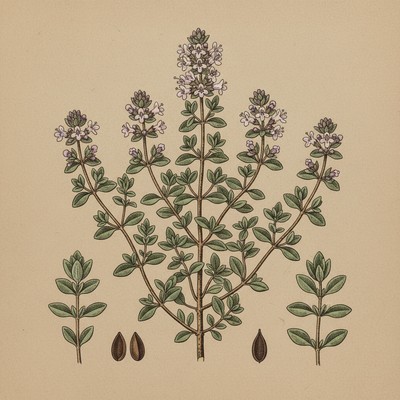
Thymus vulgarisThyme is a fragrant Mediterranean herb with a long history in the ancient world. Greek soldiers bathed in thyme for courage, while others burned it as incense. It contains thymol and is a known expectorant, which means it helps clear mucus. This explains why thyme is traditionally used to support comfort during coughs and chest congestion. Its aromatic nature also made it valuable for preserving food and helps explain why thyme is traditionally used to support the body's natural defenses during seasonal challenges. As a carminative, an old term for easing gas, it is traditionally used to settle an upset stomach.
Traditionally used for
- Support respiratory comfort during coughs and congestion
- Support the body's natural defenses during seasonal challenges
- Ease occasional digestive upset
Quick facts
Pairs well with
Common questions
Is thyme tea good for a cough?
Thyme is traditionally used to support respiratory comfort during coughs and congestion. It is also a known expectorant, meaning it helps clear mucus. Tea is the most common form, though thyme is also available as a tincture, infusion, or topical preparation. Therapeutic amounts are not suitable during pregnancy or breastfeeding, an important point before making a daily cup a regular habit.
Does thyme tea help with mucus?
Expectorant is the traditional word for an herb that helps clear mucus. Thyme has long been described this way, and it contains thymol. This is why thyme is traditionally used to support comfort during coughs and chest congestion. Its aromatic character also made it useful for preserving food and contributes to its other reputation: thyme is traditionally used to support the body's natural defenses during seasonal challenges.
Can you mix thyme and rosemary?
Yes, although each herb brings something different. Rosemary is traditionally used to support mental clarity and memory, while thyme is traditionally used to support respiratory comfort. They pair especially well in flavor. Rosemary tastes pine-like and woody with a bitter edge, while thyme is earthier, with gentle mint beneath its warmth. Avoid therapeutic doses of either herb during pregnancy. Thyme may slow blood clotting, and rosemary may interact with blood thinners. Concentrated rosemary is not recommended for anyone with a seizure disorder or whose blood pressure is high.
Can you mix thyme and oregano?
These herbs have more in common than many pairings. Both are traditionally used to support the body's natural defenses during seasonal challenges, and each has a digestive role. Oregano is traditionally used to ease bloating, while thyme is traditionally used to settle occasional upset. Because oregano is pungent and can dominate a cup, begin with less and allow thyme's earthy mint flavor to show. Avoid therapeutic amounts during pregnancy or breastfeeding. Oregano may lower blood sugar, and both herbs may affect blood clotting. Avoid oregano if you react to mint-family plants, including basil and sage.
What does thyme tea taste like?
Thyme tea tastes earthy, with a light mint note and a warm finish. Thymus vulgaris is a savory cooking herb before it is a tea herb, so its cup leans more savory than floral. That can surprise first-time drinkers. The touch of mint keeps it from tasting like soup. Beside a pungent herb such as oregano, thyme has the quieter flavor.
Who should avoid thyme?
Start with pregnancy and breastfeeding: therapeutic doses should be avoided, although using thyme in cooking is another matter. Thyme may interact with thyroid medications, so tell your healthcare provider if you take one. It may also slow blood clotting, which means caution is needed when using thyme alongside anticoagulant medications.
Can you grow thyme in containers?
Yes. Thyme can grow in a pot on a balcony or sunny windowsill, fitting for a Mediterranean plant. Fresh and dried thyme can both be added to a cup just like the jarred herb. Growing your own is optional, since dried thyme is readily available at any grocery store. A pot is mainly useful for keeping the fresh herb close at hand.
Safety
Avoid therapeutic doses during pregnancy and breastfeeding. May slow blood clotting; use caution with anticoagulant medications. May interact with thyroid medications.
These statements have not been evaluated by the Food and Drug Administration. This information is not intended to diagnose, treat, cure, or prevent any disease. Always consult a qualified healthcare provider before using herbs, especially if you are pregnant, nursing, taking medication, or have a medical condition.
More from the herb library
Blend Thyme in the Yarrow app
Browse 100 herbs, build your shelf, and create blends from what you have.
100% Ad-Free · Some features require premium