Sage
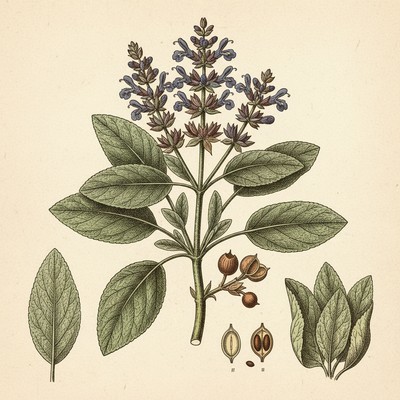
Salvia officinalisSage's Latin name Salvia comes from 'salvare,' meaning 'to save' or 'to heal,' reflecting its revered place in traditional European medicine. This silvery-green herb has a well-earned reputation for supporting digestion (it's great for reducing gas and bloating after meals) and for its astringent qualities that help dry up excessive fluids. That astringency is one reason sage has been used to reduce perspiration—helping with night sweats and hot flashes in menopausal women—and to soothe sore throats (as a gargle). Sage also contains compounds that can influence hormone balance, making it particularly valued for women's health issues like menopause. Overall, sage is a warming, slightly bitter herb that not only flavors food but also offers comfort during digestive upset and transitional phases like menopause (though it's avoided in large amounts during breastfeeding due to its drying effect on milk).
Traditionally used for
- Support digestive comfort and reduce occasional gas
- Ease hot flashes and night sweats during menopause
- Support oral health and soothe throat discomfort
Quick facts
Pairs well with
Common questions
Is sage tea used for hot flashes?
Sage is traditionally used to ease menopausal hot flashes and night sweats, which is one reason it appears in the women's health category. Tradition links the plant's astringent, drying quality with reduced perspiration. Tea and tincture are the most common forms. Do not use sage during pregnancy or breastfeeding because it may reduce milk supply. Check with your healthcare provider before use if you take sedative medication or medicine for blood sugar.
Can you use sage tea for a sore throat?
Traditionally, sage is prepared as a gargle instead of a drink to sip. Sage is traditionally used to support oral health and soothe throat discomfort, and it has also been used topically. Its flavor is earthy and peppery, with an underlying camphor note, so taste is not usually the attraction. Severe throat discomfort, or discomfort that lingers, should be taken to a clinician rather than a teapot.
How do you make sage tea?
You can use either fresh or dried leaves. Cover them with hot water and leave them to infuse, tasting along the way, since a longer steep makes sage sharper and more camphor-heavy. Dried sage is readily available because it is also used in cooking. Most people find plain sage quite strong. Fennel adds sweetness, thyme maintains a savory character, and rosemary, which tastes pine-like and bitter alone, takes the blend in a woodier direction.
Can you mix sage and thyme?
These herbs taste naturally suited to the same pot. Both are earthy, but thyme brings minty warmth while sage has a peppery camphor edge. Thyme is traditionally used to support respiratory comfort during coughs and congestion, and sage is traditionally used to soothe throat discomfort, giving the blend that focus. Start with equal parts. Avoid sage during pregnancy and breastfeeding, and thyme in therapeutic doses. Thyme may also slow blood clotting, an important concern for anyone taking an anticoagulant.
Can you mix sage and fennel?
There is one complication with this pairing. Both herbs overlap in sage's two categories, digestion and women's health, and both are traditionally used to ease gas and bloating, making the blend suitable after a meal. Fennel's sweet licorice flavor softens sage's peppery edge and is gentle enough for an equal-parts blend. The complication involves lactation. Fennel is traditionally used to support it, while sage is avoided during breastfeeding because it may reduce milk supply. Fennel may also have estrogenic effects.
Who should avoid sage?
Anyone who is pregnant or breastfeeding should avoid sage because it may reduce milk supply. Sage is also not recommended for people who have seizure disorders. It may interact with sedative medications and medicines for blood sugar, so speak with your healthcare provider before making sage part of your daily routine. The breastfeeding caution specifically concerns large amounts, where its drying effect on milk appears.
Can you grow sage in containers?
Yes. Sage does well in a pot on a balcony or sunny windowsill. Since dried sage is easy to purchase, growing your own is a choice rather than a need. Its silvery-green foliage also makes it easy to recognize among other container plants. Pick the amount you need for cooking, then dry the remaining leaves for tea.
Safety
Avoid during pregnancy and breastfeeding (may reduce milk supply). Not recommended for those with seizure disorders. May interact with diabetes and sedative medications.
These statements have not been evaluated by the Food and Drug Administration. This information is not intended to diagnose, treat, cure, or prevent any disease. Always consult a qualified healthcare provider before using herbs, especially if you are pregnant, nursing, taking medication, or have a medical condition.
More from the herb library
Blend Sage in the Yarrow app
Browse 100 herbs, build your shelf, and create blends from what you have.
100% Ad-Free · Some features require premium