Basil
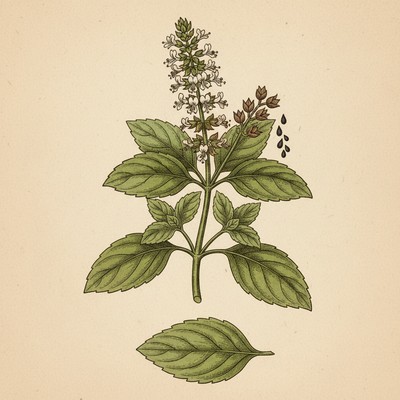
Ocimum basilicumBasil is a beloved culinary herb originally from tropical Asia that has been cherished for its aroma and flavor. In herbal traditions such as Ayurveda, sweet basil is considered a carminative (soothing digestive aid that relieves gas) and mild relaxant, used for thousands of years to support healthy digestion and ease stress. Beyond the kitchen, basil's comforting properties have made it a staple for promoting gastrointestinal comfort and a sense of calm in traditional wellness practices.
Traditionally used for
- Support healthy digestion and ease occasional stomach discomfort
- Promote a sense of calm and ease nervous tension
- Support respiratory comfort during seasonal changes
Quick facts
Pairs well with
Common questions
Is basil the same as holy basil or tulsi?
No. This page covers sweet basil, Ocimum basilicum, the culinary herb originally from tropical Asia. Holy basil, also called tulsi, is a different plant with a separate entry in the Yarrow library, and the information below does not describe it. Keep that distinction in mind if your search was about tulsi and sleep. Sweet basil is traditionally used to support digestion and calm, not sleep.
Can you mix basil and thyme in tea?
Basil and thyme overlap in two ways, which is unusual for herbs often kept in the same cupboard. Both are traditionally used to ease occasional digestive upset, and both are traditionally used to support respiratory comfort. Basil is used through seasonal changes, while thyme is used through coughs and congestion. Thyme is earthy, slightly minty, and warming. It rests beneath basil's sweeter, clove-like flavor rather than competing. Begin with equal parts. Neither is suitable in therapeutic doses during pregnancy or breastfeeding, and both have blood clotting cautions. Thyme may also interact with thyroid medications.
Can you mix basil and oregano?
Their common ground is digestion. Basil is traditionally used to support healthy digestion, while oregano is traditionally used to promote healthy digestion and ease bloating. In a cup, oregano is the louder herb, with a pungent, bitter, warming taste. Start with less oregano so basil's sweetness stays forward. The most important caution is that both belong to the Lamiaceae family with mint and sage, so an allergy to any of them rules out the blend. Therapeutic doses are not suited to pregnancy or breastfeeding. Both herbs may also lower blood sugar and affect blood clotting.
What does basil tea taste like?
It tastes sweet at first, followed by a peppery edge and underlying clove-like notes. In a cup, Ocimum basilicum tastes like the basil used in cooking, although not every culinary herb keeps its familiar flavor in hot water. Its sweetness makes blending simple. The clove note is persistent, so basil still comes through beside something as pungent as oregano.
How do you make basil tea?
Infuse the leaves by steeping them in hot water. That is all it takes, and basil is readily available, so either a supermarket bunch or a jar of dried leaves works. Tinctures and topical preparations are also traditional options when tea is not what you want. For blending, rosemary is one of basil's listed partners, bringing a pine-like, woody flavor against basil's sweetness. Rosemary has its own cautions, including interactions with blood thinners, diuretics, and lithium.
Who should avoid basil?
If you take anticoagulant medication, check with a healthcare provider first because basil may affect blood clotting. Basil may also lower blood sugar, which is relevant if you already monitor yours. Avoid therapeutic doses during pregnancy and breastfeeding. This warning concerns concentrated amounts, not the basil in pesto. Family allergies matter too: basil belongs to the Lamiaceae family along with mint and sage, so a known allergy to plants in that family includes basil.
Can you grow basil in containers?
Yes. Basil is among the easiest herbs to grow in a pot. Keep one near the kitchen, take a few leaves when needed, and the plant continues growing. Dried basil is readily available too, making a windowsill plant optional.
Safety
Avoid therapeutic doses during pregnancy and breastfeeding. May affect blood clotting; consult healthcare provider if taking anticoagulant medications. May lower blood sugar levels.
These statements have not been evaluated by the Food and Drug Administration. This information is not intended to diagnose, treat, cure, or prevent any disease. Always consult a qualified healthcare provider before using herbs, especially if you are pregnant, nursing, taking medication, or have a medical condition.
More from the herb library
Blend Basil in the Yarrow app
Browse 100 herbs, build your shelf, and create blends from what you have.
100% Ad-Free · Some features require premium