Chamomile
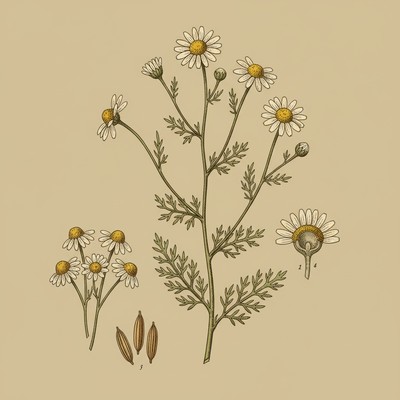
Matricaria chamomillaChamomile is one of the oldest and most beloved herbal remedies, with use documented for over 5,000 years from ancient Egypt to medieval Europe. These daisy-like flowers have soothing, anti-inflammatory properties; a cup of chamomile tea is famously used to calm anxiety, ease indigestion, and promote sleep. Chamomile's gentle nature makes it a go-to herb for all ages to help with restlessness, nervousness, or an upset stomach.
Traditionally used for
- Promote restful sleep and ease insomnia
- Calm nervous tension and reduce anxiety
- Soothe digestive upset and ease stomach cramping
Quick facts
Pairs well with
Common questions
Can you mix chamomile and lavender tea?
Yes. Both herbs are traditionally used to promote restful sleep, which is why they show up together in so many bedtime blends. Chamomile's apple-like sweetness softens lavender's floral intensity. A little lavender goes a long way; try one part lavender to two parts chamomile and adjust from there. Skip this blend if you're allergic to ragweed or other plants in the daisy family, and talk to your healthcare provider first if you take sedative medications, since both herbs may interact with them.
Can you mix chamomile and peppermint tea?
They work well together, and it's a classic after-meal cup: both herbs are traditionally used to soothe digestive upset. Peppermint dominates a blend, so equal parts keeps chamomile's honeyed flavor in the picture. Avoid concentrated peppermint if you have GERD or a gallbladder condition.
Can you mix chamomile and lemon balm?
This is one of the gentlest pairings in the herbal world. Lemon balm brings a bright lemony lift, chamomile brings the sweetness, and both are traditionally used to ease nervous tension and support sleep. A good first blend if you're new to herbal tea. Lemon balm may interact with thyroid medications; chamomile with blood thinners and sedatives.
What does chamomile tea taste like?
Gentle apple-like sweetness with floral honey notes. Matricaria chamomilla is one of the mildest herbal teas, which is part of why it blends so easily with stronger flavors like peppermint or lavender.
Who should avoid chamomile?
Anyone allergic to plants in the Asteraceae family: ragweed, daisies, chrysanthemums. Chamomile may also interact with blood-thinning medications and sedatives, and pregnant women should use caution. When in doubt, ask your healthcare provider.
Can you grow chamomile in containers?
Yes, easily. Chamomile does fine in a pot on a sunny windowsill or balcony, and the daisy-like flowers are the part you harvest for tea.
Safety
Avoid if allergic to plants in the Asteraceae family (ragweed, daisies, chrysanthemums). May interact with blood-thinning medications and sedatives. Use caution during pregnancy.
These statements have not been evaluated by the Food and Drug Administration. This information is not intended to diagnose, treat, cure, or prevent any disease. Always consult a qualified healthcare provider before using herbs, especially if you are pregnant, nursing, taking medication, or have a medical condition.
More from the herb library
Blend Chamomile in the Yarrow app
Browse 100 herbs, build your shelf, and create blends from what you have.
100% Ad-Free · Some features require premium