Peppermint
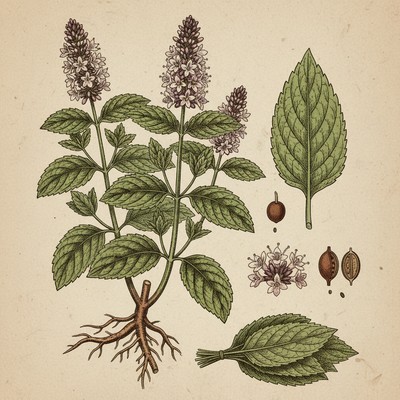
Mentha piperitaPeppermint is a cooling herb known worldwide for its minty aroma. It's a natural hybrid of watermint and spearmint cultivated since the 17th century. Medicinally, peppermint's menthol-rich leaves act as an antispasmodic (relieving muscle spasms) to ease indigestion and nausea, and as a decongestant to support clear breathing. Peppermint is even used topically (in diluted oil form) to cool and relieve tension headaches by applying it to the temples. All these benefits, combined with its pleasant taste, make peppermint one of the most popular and accessible herbal remedies for both digestive comfort and respiratory relief.
Traditionally used for
- Ease occasional indigestion, bloating, and nausea
- Support comfortable breathing and ease sinus congestion
- Soothe occasional headaches when applied topically
Quick facts
Pairs well with
Common questions
Is peppermint tea good for bloating?
Peppermint is traditionally used to ease occasional indigestion, bloating, and nausea, so having a cup after a heavy meal is a familiar habit. Its menthol-rich leaves act as an antispasmodic, meaning they relax muscle spasms. Tea is the usual form. Avoid concentrated peppermint if you have GERD or a hiatal hernia, and check with your healthcare provider first if you take medications metabolized by the liver.
Can you drink peppermint and chamomile tea together?
Their common ground is digestion: chamomile is traditionally used to soothe digestive upset and stomach cramping, while peppermint is traditionally used to ease indigestion and bloating. Chamomile also contributes the sleep and calming side, which peppermint does not. Flavor needs attention because strong mint can overwhelm chamomile's apple-like sweetness, so begin with less of the stronger herb. Keep both cautions in mind: chamomile's daisy family allergy, including ragweed and chrysanthemums, and peppermint's GERD and gallbladder warnings.
Can you mix peppermint and ginger tea?
Both herbs belong in the digestion category, and both are traditionally used to ease nausea, making the pairing easy to understand. The flavor contrast is especially interesting. Ginger is spicy, warming, and pungent with citrus notes, while peppermint is cool and sharp, so the cup delivers both sensations together. Equal parts is a good starting point. Ginger may increase bleeding risk and lower blood sugar, so speak with your healthcare provider if you take blood thinners or have surgery coming up.
What does peppermint tea taste like?
Peppermint tastes cool, refreshing, and intensely minty. Mentha piperita is a natural watermint and spearmint hybrid that has been cultivated since the 17th century. Its leaves contain plenty of menthol, which creates that cold sensation. The flavor is bold, so it can dominate a blend unless you use less peppermint than the herb beside it.
Who should avoid peppermint?
The most significant cautions apply to concentrated forms. Avoid these if you have GERD or a hiatal hernia, and be cautious with gallbladder conditions. Peppermint may also interact with medications metabolized by the liver, so discuss it with your healthcare provider if you take any. The topical form, diluted oil rubbed on the temples, should not be used for infants or young children.
Does peppermint tea help with congestion?
Beyond digestion, peppermint has a history of respiratory use. It is traditionally used to support comfortable breathing and ease sinus congestion, with the menthol in its leaves behind that use. Another traditional use is not a drink: diluted peppermint oil applied to the temples is traditionally used to soothe occasional headaches. The same cautions apply either way, and concentrated forms should be avoided with GERD or a hiatal hernia.
Can you grow peppermint in containers?
Yes. Peppermint grows well in a pot on a sunny windowsill or balcony. You harvest the leaves, which can be used fresh or dried for later. It is also among the easiest herbs to buy already dried, so growing it yourself is a matter of preference, not a necessity.
Safety
Avoid concentrated forms with GERD or hiatal hernia. May interact with medications metabolized by the liver. Use caution with gallbladder conditions. Not for infants or young children topically.
These statements have not been evaluated by the Food and Drug Administration. This information is not intended to diagnose, treat, cure, or prevent any disease. Always consult a qualified healthcare provider before using herbs, especially if you are pregnant, nursing, taking medication, or have a medical condition.
More from the herb library
Blend Peppermint in the Yarrow app
Browse 100 herbs, build your shelf, and create blends from what you have.
100% Ad-Free · Some features require premium