Ginger
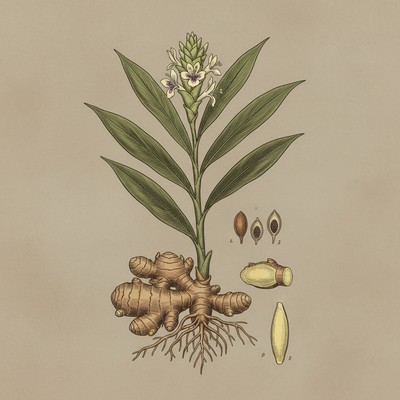
Zingiber officinaleFor more than 5,000 years, ginger has been among the world's oldest and most widely used spices in Chinese, Indian, and Middle Eastern cultures. The knobby part sold as ginger is a rhizome, not a true root, with a warming, stimulating character. Ginger is best known for the stomach. It is traditionally used to ease nausea, motion sickness, and morning sickness; traditionally, this is explained by its ability to increase digestive fluids and settle the stomach. It is also traditionally used to support comfortable joints and ease muscle soreness. People drink ginger tea or chew candied ginger for cold hands and feet or to fend off a chill because it warms the body from within.
Traditionally used for
- Ease nausea, motion sickness, and morning sickness
- Support comfortable joints and ease muscle soreness
- Warm the body and support healthy circulation
Quick facts
Pairs well with
Common questions
Can you mix ginger and turmeric in tea?
Turmeric leads ginger's pairing list, and their overlap is straightforward: both belong in the digestion and inflammation categories. Turmeric is traditionally used to support a healthy inflammatory response and joint comfort, while ginger is traditionally used to ease muscle soreness and warm the body. Ginger adds heat and a citrus edge to turmeric's earthy, mildly bitter base. Start with equal parts. Their cautions add together: both may increase bleeding risk and affect blood sugar. Turmeric in therapeutic amounts should not be used with a gallbladder condition, and it may interact with stomach acid reducers.
Can you mix ginger and cinnamon tea?
Yes. The pairing offers more than flavor. Both herbs are traditionally used to warm the body and support circulation, and both belong in the digestion category. Cinnamon is sweet, warm, aromatic, and gently spicy, which softens ginger's sharper pungency. Watch blood sugar, since both may lower it. Cinnamon may also interact with blood-thinning medications. Its therapeutic doses should be avoided during pregnancy, while high doses may be hard on the liver.
What does ginger tea taste like?
Ginger tea tastes spicy and pungent, with warmth and underlying citrus notes. What goes into the cup is the rhizome of Zingiber officinale, and most people notice the heat first. Ginger tends to lead any blend it joins, so use a lighter hand with the herb beside it. Candied ginger offers that same heat covered with sugar.
How do you make tea with ginger root?
Ginger can be prepared as tea, a decoction, a tincture, or a capsule. A decoction is the simmered form: pieces of rhizome cook in the water rather than simply sitting in it. Plain ginger has enough strength to stand alone. In blends, its listed partners are turmeric, cinnamon, and fennel; equal parts is a good starting point with each. Whether fresh or dried, ginger is among the easier herbs to find.
Is ginger tea safe during pregnancy?
During pregnancy, food amounts are generally considered safe. Therapeutic doses are another matter and should be discussed with your healthcare provider, not settled by a search result. The question comes up frequently because ginger is traditionally used to ease nausea, motion sickness, and morning sickness, its best known traditional use, so many people reach for it first. Two cautions apply regardless of pregnancy: ginger may increase bleeding risk and may lower blood sugar.
Is ginger tea good for sleep?
Sleep is not a traditional use for ginger. Ginger is traditionally used to ease nausea and motion sickness, support comfortable joints, ease muscle soreness, and warm the body to support circulation. Sleep does not appear on that list. The plant is commonly described as warming and stimulating, nearly the opposite of what people seek in a bedtime cup. If you enjoy ginger at night, drink it. For sleep itself, choose an herb whose own traditional uses include it.
Who should avoid ginger?
Blood-thinning medication is the primary concern because ginger may increase bleeding risk. High doses should also be avoided before surgery. Ginger may lower blood sugar too, so discuss it with your healthcare provider if you already manage blood sugar with medication or drink ginger every day alongside a prescription. During pregnancy, food amounts are the general guideline, but therapeutic doses call for a provider's advice.
Safety
May increase bleeding risk; use caution with blood-thinning medications. May lower blood sugar. Avoid high doses before surgery. Generally safe in food amounts during pregnancy; consult healthcare provider for therapeutic doses.
These statements have not been evaluated by the Food and Drug Administration. This information is not intended to diagnose, treat, cure, or prevent any disease. Always consult a qualified healthcare provider before using herbs, especially if you are pregnant, nursing, taking medication, or have a medical condition.
More from the herb library
Blend Ginger in the Yarrow app
Browse 100 herbs, build your shelf, and create blends from what you have.
100% Ad-Free · Some features require premium