Lemon Balm
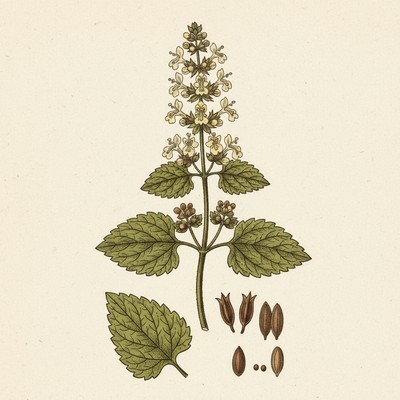
Melissa officinalisLemon balm has been cultivated for more than 2,000 years. In medieval times, it was called the gladdening herb because of its uplifting effect on mood. This mint-family plant has a bright, lemony scent and is a gentle nervine, the herbalist's term for a calming herb. It is traditionally used to ease anxiety, support restful sleep, and settle indigestion. Most people encounter it as a relaxing tea for stress and sleep. Lemon balm is very well tolerated, though very large doses might cause drowsiness. It may also interact with thyroid medications because it can slightly inhibit thyroid function. Both new and experienced herbalists keep it on hand, with its lemony flavor being a large part of the appeal.
Traditionally used for
- Ease nervous tension, anxiety, and promote calm
- Support restful sleep and ease restlessness
- Soothe digestive upset and ease occasional gas
Quick facts
Pairs well with
Common questions
Can you mix lemon balm and chamomile tea?
These herbs overlap in all three categories we place them under: stress, sleep, and digestion. Equal parts makes a good starting point. Lemon balm's bright note arrives first, while chamomile's apple-honey sweetness rests beneath it, and neither overpowers the other. Keep two cautions in mind. Avoid chamomile if you react to ragweed or other daisy-family plants, and lemon balm may interact with thyroid medications. Both can interact with sedatives, so ask your provider if you take one.
Can you mix lemon balm and lavender?
Both are traditionally used to ease nervous tension and support restful sleep, making them a sensible bedtime blend. Lavender has the stronger flavor. It is floral and slightly herbaceous, so begin with less and allow the lemon flavor to lead. For safety, avoid lavender during pregnancy and skip high doses before surgery. Lemon balm may interact with thyroid medications, while sedatives are a caution with both herbs.
Does lemon balm tea help with sleep?
Supporting sleep is among its oldest traditional uses, alongside easing restlessness and nervous tension. Lemon balm is classed as a nervine, meaning a calming herb, and falls at the mild end of this group. In a nighttime cup, it pairs well with chamomile, lavender, or passionflower, which are all traditionally used to support restful sleep. Very large doses may cause drowsiness. It may also interact with sedative medications, so be careful if you already take something at night.
How do you make lemon balm tea?
Use fresh or dried leaves with hot water and steep them as a simple infusion. That is the entire recipe. If you have a pot growing, you can pick leaves directly into your cup, which is usually what people want when searching for a recipe. Blends offer more variety. Equal parts lemon balm and chamomile make an easy first combination. When adding lavender, use less of it than either of the other herbs.
What does lemon balm tea taste like?
It tastes fresh and lemony, with mild mint notes and a soft sweetness underneath. Melissa officinalis belongs to the mint family, which explains that minty edge. Its gentle flavor can accompany a stronger herb without getting lost, a major reason it appears in so many blends.
Who should avoid lemon balm?
Thyroid medication is the main concern. If you take any, ask your provider before drinking lemon balm regularly. Avoid therapeutic doses entirely if you have a thyroid condition because the herb can slightly inhibit thyroid function. Lemon balm may also interact with sedatives, while pregnancy and breastfeeding call for caution. Otherwise, it is well tolerated enough to be a common choice for a first herb.
Can you grow lemon balm in containers?
Yes. A container near the kitchen works well because you pick the leaves. The scent also serves as an identification check: crush one leaf and it should smell sharply lemony. Dried lemon balm is widely available in shops too, so you do not need to grow your own to get started.
Safety
Generally well-tolerated. May interact with thyroid medications and sedatives. Avoid therapeutic doses with thyroid conditions. Use caution during pregnancy and breastfeeding.
These statements have not been evaluated by the Food and Drug Administration. This information is not intended to diagnose, treat, cure, or prevent any disease. Always consult a qualified healthcare provider before using herbs, especially if you are pregnant, nursing, taking medication, or have a medical condition.
More from the herb library
Blend Lemon Balm in the Yarrow app
Browse 100 herbs, build your shelf, and create blends from what you have.
100% Ad-Free · Some features require premium