Lavender
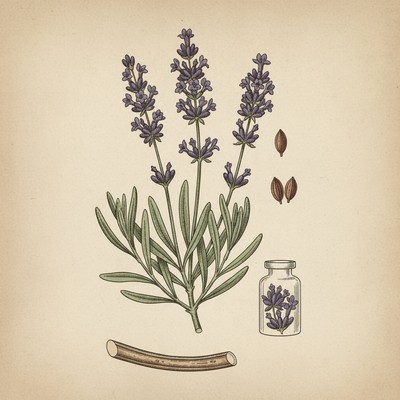
Lavandula angustifoliaLavender is known worldwide for its calming fragrance and has been used for well over 2,500 years, from mummification in ancient Egypt to Roman bathhouses. Medicinally, it is mainly a nervine and mild sedative. Its aroma alone has measurable effects on the nervous system, helping explain the essential oil's popularity in aromatherapy. It is traditionally used to ease stress, while lavender tea or a lavender-infused pillow is traditionally used to promote better sleep. Traditional herbalists also apply lavender water or diluted oil to the skin for minor burns, especially sunburn. The tea is potent and becomes bitter beyond small amounts.
Traditionally used for
- Promote restful sleep and ease insomnia
- Reduce anxiety, nervous tension, and promote calm
- Traditionally used topically to soothe skin irritation and minor burns
Quick facts
Pairs well with
Common questions
What does lavender tea taste like?
Floral and sweet, with an underlying herbaceous edge. It is strong, however. Lavandula angustifolia becomes bitter when you use more than a small amount of dried buds, a surprise for people who measure it like chamomile. Just a little can flavor an entire pot, so it usually works better as a smaller part of a blend rather than the base.
Can you mix chamomile and lavender tea?
Many bagged bedtime teas already combine them. Both plants are traditionally used to support sleep and ease stress, while chamomile's apple-like sweetness balances lavender's floral character. Lavender is the stronger herb, so begin with less and adjust as needed. Keep two cautions in mind: avoid chamomile if you react to ragweed or chrysanthemums, and either herb may interact with sedative medications.
Can you mix lavender and lemon balm?
Lemon balm helps soften lavender. Its lemony, lightly minty freshness cuts through the perfume, and both plants are traditionally used to ease nervous tension and support restful sleep. Use less lavender, since it remains the stronger of the two. For safety, lemon balm may interact with thyroid medications, and anyone with a thyroid condition should avoid therapeutic doses. Lavender also carries cautions related to sedatives and pregnancy.
What is lavender traditionally used for?
Lavender is traditionally used to support sleep and calm, above all. Herbalists classify it as a nervine and mild sedative, with traditional use centered on restful sleep and easing nervous tension. It also has a topical history: lavender water or diluted oil has long been used on minor burns and irritated skin, including sunburn. Its fragrance plays a role, so the essential oil appears in aromatherapy as often as dried buds appear in tea. The plant has been used for well over 2,500 years, from Egyptian mummification to Roman bathhouses.
What is a simple lavender tea recipe?
Start with dried flower buds, using less than you expect. Lavender quickly becomes bitter, so it is wiser to use too little and add more the next time than lose the entire cup. A plain infusion is the usual preparation, with tincture as the other common option. If the floral flavor feels too heavy alone, chamomile or lemon balm can soften it.
Who should avoid lavender?
People preparing for surgery should avoid lavender. It may interact with anesthesia, and high doses are best stopped beforehand. Pregnancy is another clear reason to avoid it. Sedative medications also raise concern because lavender is itself a mild sedative, and their effects can compound. The plant may have mild hormonal effects as well, which explains the standing caution for young boys. If you take anything every day, ask your healthcare provider.
Can you grow lavender in containers?
Yes, lavender grows well in a pot. The key is plenty of sun, whether it sits on a balcony or bright windowsill, and the buds are what you dry for tea. If you prefer not to grow it, dried lavender is also easy to find.
Safety
Generally well-tolerated. May interact with sedative medications and anesthesia. Avoid high doses before surgery. May have mild hormonal effects; use caution with young boys. Avoid during pregnancy.
These statements have not been evaluated by the Food and Drug Administration. This information is not intended to diagnose, treat, cure, or prevent any disease. Always consult a qualified healthcare provider before using herbs, especially if you are pregnant, nursing, taking medication, or have a medical condition.
More from the herb library
Blend Lavender in the Yarrow app
Browse 100 herbs, build your shelf, and create blends from what you have.
100% Ad-Free · Some features require premium