Hops
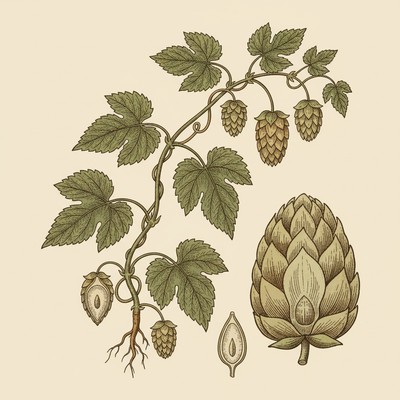
Humulus lupulusHops are best known as a beer-brewing ingredient, but long before brewing, they were used as a sedative herb in European folk medicine. The green, cone-like flowers of the hops vine contain bitter resins that act as a strong relaxant and hypnotic (sleep-inducing agent). Traditionally, dried hops were stuffed into pillows to help people sleep, and hops tea or tincture is still used for insomnia and anxiety. The bitterness also aids digestion, though hops' main reputation is for calming the nervous system and supporting deep sleep.
Traditionally used for
- Promote deep, restful sleep and ease insomnia
- Calm nervous tension and reduce anxiety
- Ease digestive discomfort
Quick facts
Pairs well with
Common questions
Does hops help you sleep?
Sleep is what hops has been known for longest. European folk medicine used it as a sedative herb well before it was brewed, and people stuffed dried cones into pillows when they struggled to settle at night. Today it is traditionally used to encourage deep, restful sleep and calm nervous tension, most often as tea or tincture and sometimes in capsules. It may interact with sedative medications. If you already take something at night, check with your healthcare provider first.
Why are valerian and hops used together?
Both belong in the same two areas, sleep and stress, and both are traditionally used to encourage deep sleep and settle nervous tension. That shared purpose is why their names so often appear together. Their taste gets less attention. Valerian is earthy and musty, while hops is bitter and resinous, so the result is anything but delicate. Equal parts is a reasonable starting point. Hops may interact with sedative medications, and valerian should be avoided alongside them. Neither is recommended during pregnancy or breastfeeding, and valerian must be stopped two weeks before surgery.
Can you blend hops, valerian and passionflower?
This blend appears constantly in searches, and the logic is sound: all three are traditionally used to encourage restful sleep and ease nervous tension. Passionflower is the mildest, traditionally used to quiet racing thoughts and support relaxation without heavy sedation. Its grassy sweetness also softens some of the edge of the other two. Begin with less hops and valerian. Hops and passionflower may interact with sedative medications, while valerian should be avoided alongside them. None of the three is recommended during pregnancy, and passionflower has additional cautions involving MAO inhibitors, blood-thinning medication and surgery.
Can you mix hops and chamomile tea?
Chamomile is a natural partner when hops alone tastes too bitter. Its apple-honey sweetness balances the resin and makes the tea easier to drink. Both are traditionally used to support sleep and calm nervous tension, and each has a history with digestive discomfort. Use a smaller amount of hops than chamomile. Skip this blend if you react to ragweed, daisies or chrysanthemums. Avoid hops if you are dealing with depression, and remember that either herb may interact with sedatives.
What does hops tea taste like?
It is bitter, with a resinous edge and subtle fruitiness beneath it. Humulus lupulus is best known for brewing, and its bitterness comes through in tea with little softening. Some people enjoy it, while plenty do not. That is why hops often works better as a small part of a blend instead of its base, and why tinctures and capsules remain popular. The sweetness of chamomile provides the simplest counterweight.
Who should avoid hops?
Anyone dealing with depression should avoid hops because it may worsen symptoms. It may also interact with sedative medications, so consult your provider if you take one. Hormone-sensitive conditions are another reason to check before using it regularly. Hops is also on the avoid list during pregnancy and breastfeeding. For some people, handling the plant can cause contact dermatitis, something to remember before stripping a vine with bare hands.
Can you grow hops in containers?
Yes, but remember that hops is a vine and needs a structure to climb. A large pot next to a trellis works, as does string running up a balcony wall. Dry the green, cone-like flowers for tea. Wear gloves while picking them because the plant may cause contact dermatitis. If that feels like too much effort, dried hops is available in specialty stores rather than the typical supermarket tea aisle.
Safety
Avoid with depression (may worsen symptoms). May interact with sedative medications. Those with hormone-sensitive conditions should consult healthcare provider. Avoid during pregnancy and breastfeeding. May cause contact dermatitis.
These statements have not been evaluated by the Food and Drug Administration. This information is not intended to diagnose, treat, cure, or prevent any disease. Always consult a qualified healthcare provider before using herbs, especially if you are pregnant, nursing, taking medication, or have a medical condition.
More from the herb library
Blend Hops in the Yarrow app
Browse 100 herbs, build your shelf, and create blends from what you have.
100% Ad-Free · Some features require premium