Valerian
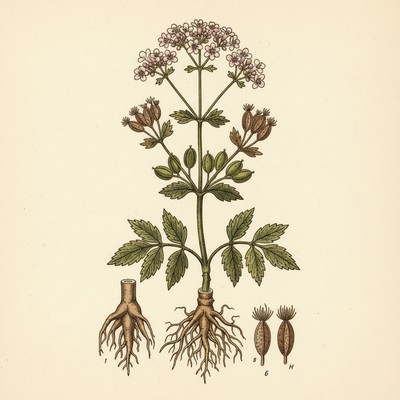
Valeriana officinalisValerian root has a long history of use as a potent sleep aid, earning it the nickname 'nature's tranquilizer.' It has a distinctive earthy odor, but remains one of the most effective herbs for promoting deep, restful sleep and calming an overactive mind. Herbalists also use valerian to help relax tense muscles and ease mild anxiety, though its sedative effects can leave some people groggy by morning.
Traditionally used for
- Support deep, restful sleep and ease insomnia
- Reduce anxiety and nervous restlessness
- Ease muscle tension and promote relaxation
Quick facts
Pairs well with
Common questions
Is valerian root good for sleep?
Valerian root has been known as a sleep herb for many years, earning the nickname nature's tranquilizer. It is traditionally used to encourage deep, restful sleep and settle an overactive mind. That sedating effect has a downside: some people feel groggy the following morning, so trying your first cup before an early start is unwise. If you use sedative medications, speak with your healthcare provider before taking it.
Can you mix valerian and hops?
Yes. Both are traditionally used to encourage deep, restful sleep and calm nervous tension, so their purposes complement each other. Hops adds a bitter, resinous edge to valerian's earthy, musty base, creating a blunt cup. Begin with less valerian because it is more pungent. Both may interact with sedative medications and should be avoided during pregnancy and breastfeeding. Hops is also not recommended for anyone dealing with depression.
Can you mix valerian root and passionflower?
Passionflower is the milder partner, traditionally used to settle racing thoughts and encourage relaxation without heavy sedation. Valerian is traditionally used to support deep, restful sleep. Passionflower's mildly grassy, slightly sweet taste also softens valerian's mustiness. Use equal parts, or add more passionflower if the smell bothers you. Keep two cautions in mind: neither is recommended during pregnancy, and both should be stopped before surgery, with valerian discontinued a full two weeks beforehand.
Can you mix valerian and skullcap?
Both herbs belong in the same two areas, stress and sleep. Skullcap is traditionally used to soothe nervous tension and ease muscle tightness, while valerian shares that muscle tension use. Skullcap brings a bitter, faintly minty note to valerian's earthy woodiness, with the mint providing the cup's only lift. Combining them requires care because both can cause drowsiness, and valerian's effects may last into the morning. Purchase skullcap from a reputable source, as adulterated products pose a liver toxicity risk.
What does valerian tea taste like?
Valerian tea tastes earthy and woody, with a musty, pungent edge that often surprises people at first. The dried root of Valeriana officinalis has an equally distinctive smell. This is not a delicate tea. If the flavor puts you off, valerian also comes as a tincture or capsule. A decoction, rather than a quick steep, is another standard preparation.
Who should avoid valerian?
People taking sedative medications and those preparing for surgery should avoid valerian. It should be stopped two weeks before surgery because it may interact with anesthesia. Pregnant or breastfeeding women should also skip it, and its interaction with alcohol deserves caution. Morning drowsiness is a known effect, so if you start your day early, first try valerian on a night followed by a more forgiving morning.
Can you grow valerian in containers?
Valerian is not well suited to a pot. It is cultivated for its root rather than its leaves or flowers, so a windowsill container will not produce a useful harvest as it might for a leafy herb. Most people purchase dried valerian. It is usually found in specialty stores instead of on supermarket tea shelves.
Safety
Avoid with sedative medications and before surgery. May cause morning drowsiness. Not recommended during pregnancy or breastfeeding. May interact with alcohol and anesthesia. Discontinue 2 weeks before surgery.
These statements have not been evaluated by the Food and Drug Administration. This information is not intended to diagnose, treat, cure, or prevent any disease. Always consult a qualified healthcare provider before using herbs, especially if you are pregnant, nursing, taking medication, or have a medical condition.
More from the herb library
Blend Valerian in the Yarrow app
Browse 100 herbs, build your shelf, and create blends from what you have.
100% Ad-Free · Some features require premium