Turmeric
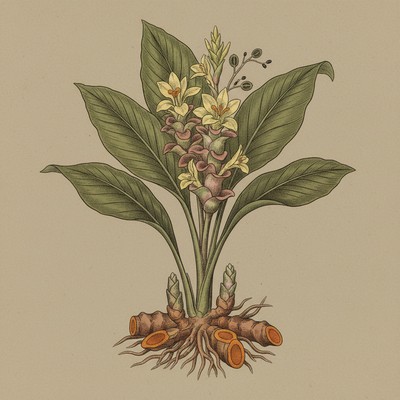
Curcuma longaTurmeric's golden-orange rhizome has held a central place in Ayurvedic medicine for more than 4,000 years. It is well known for curcumin, its active compound, and is traditionally used to support a healthy inflammatory response, particularly around muscles and joints. This warming bitter also stimulates digestive fire, a traditional expression for supporting digestion and liver function. Herbalists and cooks combine turmeric with black pepper because piperine significantly improves curcumin absorption. They may also stir it into warm milk with ghee to make golden milk. Culinary amounts are very safe, while concentrated extracts require caution for people with gallbladder issues or problems involving bleeding.
Traditionally used for
- Support healthy inflammatory response and joint comfort
- Support digestive health and liver function
- Support overall wellness and vitality
Quick facts
Pairs well with
Common questions
Can you mix turmeric and ginger?
Yes. Turmeric and ginger are among the most familiar spice cabinet pairings. Both are traditionally used to support comfortable joints and healthy digestion, so they reinforce the same purposes rather than heading in different directions. Ginger tastes pungent and spicy with a citrus edge, while turmeric adds an earthy, slightly bitter base. Equal parts works well. Both may raise bleeding risk, so be cautious with blood-thinning medications. They may also affect blood sugar.
Why is turmeric always paired with black pepper?
Piperine, the compound behind pepper's sharpness, significantly increases the amount of curcumin the body absorbs from turmeric. That is why they appear together in Indian cooking and in the spice blend trikatu. Just a pinch is enough. Black pepper is also traditionally used to support digestion and nutrient absorption by itself. Because it can increase absorption of certain medications as well, tell your healthcare provider if this is a daily habit.
Can you mix turmeric and cinnamon?
These two share a connection to digestion, and cinnamon's sweetness softens the bitterness turmeric leaves at the back of your tongue. Cinnamon is traditionally used to support healthy blood sugar balance and ease digestive discomfort. Begin with less of the stronger herb, since cinnamon can quickly dominate a blend. Both may interact with blood-thinning medications, and both may affect blood sugar. Therapeutic amounts of cinnamon should not be used during pregnancy, while high doses can be difficult for the liver.
What does turmeric tea taste like?
Turmeric tea is earthy, warm, and slightly bitter, with peppery notes in the finish. Curcuma longa is a rhizome, not a leaf or flower, and its flavor reflects that. It tastes more like a root than a floral tisane. The tea has a golden orange color. Most people blend turmeric with other herbs instead of drinking it by itself, often bringing ginger and cinnamon into the mix.
How do you make a turmeric tea blend?
Turmeric works in tea, decoctions, tinctures, and capsules. A decoction, where the herb is simmered instead of steeped, draws more from the dried rhizome. For a spiced drink, the usual starting place is equal parts turmeric and ginger plus a pinch of black pepper. Cinnamon adds sweetness. Another traditional option is golden milk, made by stirring turmeric into warm milk, sometimes with ghee. Turmeric is readily available either ground or whole.
How is turmeric used in Ayurveda?
Turmeric rhizome has held a place in Ayurvedic medicine for more than 4,000 years. Ayurveda classes it as a warming bitter that stimulates digestive fire, which is the reasoning behind its traditional use to support digestion and liver function. Trikatu, a pepper blend, exists partly because turmeric and black pepper work better together. Common household preparations include golden milk and turmeric in ghee. Culinary quantities are very safe, while concentrated extracts call for greater caution.
Who should avoid turmeric?
People taking blood-thinning medications should avoid turmeric, as should anyone with surgery scheduled. It may increase bleeding risk and should be removed from the routine beforehand. Gallbladder problems rule out therapeutic amounts. Turmeric may affect blood sugar, which is important if you already manage it, and it may interact with stomach acid reducers. Amounts used in food differ from concentrated extracts. If you take a prescription and drink turmeric daily, check with your healthcare provider.
Safety
May increase bleeding risk; avoid before surgery and with blood-thinning medications. May affect blood sugar. Avoid therapeutic doses with gallbladder problems. May interact with stomach acid reducers.
These statements have not been evaluated by the Food and Drug Administration. This information is not intended to diagnose, treat, cure, or prevent any disease. Always consult a qualified healthcare provider before using herbs, especially if you are pregnant, nursing, taking medication, or have a medical condition.
More from the herb library
Blend Turmeric in the Yarrow app
Browse 100 herbs, build your shelf, and create blends from what you have.
100% Ad-Free · Some features require premium