Rose
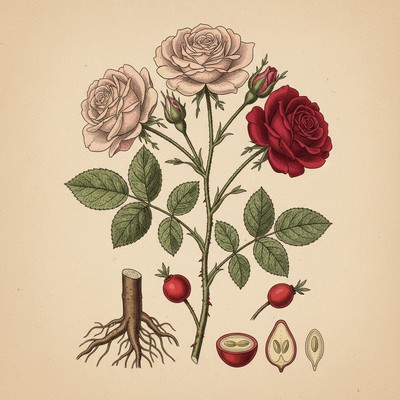
Rosa spp.Rose petals and rose hips aren't just for fragrance—they're important gentle remedies in herbalism. Culturally, roses have been symbols of love and healing for thousands of years (ancient Romans and Persians used them liberally in medicine and cuisine). Rose petals have a calming effect on the nervous system and are used to uplift mood, ease grief or emotional pain, and open the "heart," emotionally speaking (hence roses given as expressions of love). They also have a mild astringent and anti-inflammatory effect, making rose water a classic toner for soothing and tightening the skin. Rose hips (the fruit after the flower) are very high in vitamin C and were used during wartime shortages to prevent scurvy and boost immunity. Overall, preparations of rose—be it teas, jams, oils, or sprays—offer gentle support for both body and spirit, soothing sore throats and tummies, and healing heartbreaks alike.
Traditionally used for
- Ease emotional heart distress and promote emotional balance
- Traditionally used topically to soothe skin and support complexion
- Support digestive comfort and gentle astringency
Quick facts
Pairs well with
Common questions
Can you mix rose and chamomile tea?
Chamomile may be rose's easiest partner. They occupy similar ground: rose is traditionally used to promote emotional balance, while chamomile is traditionally used to calm nervous tension. Their flavors also work well together, with chamomile's apple-like sweetness and honey notes beneath rose's delicate floral character. Equal parts makes a good starting point. Avoid this blend if you react to ragweed, daisies, or chrysanthemums. If you take blood thinners or sedatives, ask your provider first.
Can you mix rose and hawthorn tea?
These two share the same traditional use, which is somewhat uncommon. Rose is traditionally used to ease emotional heart distress. Hawthorn is traditionally used for heart distress and grief, as well as cardiovascular support. Their flavors also suit each other: hawthorn is mildly tart with floral notes against rose's soft sweetness. Hawthorn requires extra care. It may interact with heart medications, blood pressure drugs, and medications for erectile dysfunction. It is not for use during pregnancy or breastfeeding.
Can you mix rose and calendula?
Their shared ground is skin. Rose is traditionally used to soothe skin and support complexion when applied topically. Calendula is traditionally used to soothe irritation, minor burns, cuts, and scrapes when applied topically. They are less natural partners in a cup. Calendula's mildly bitter, slightly resinous character can overpower rose's delicate floral flavor, so begin with less calendula. Calendula should not be taken internally during pregnancy. It may also cause reactions in anyone sensitive to the Asteraceae family.
What does rose tea taste like?
Rose tea is delicate and floral, with slight sweetness and mild astringency underneath. That astringency is useful because it keeps a cup of Rosa spp. from tasting like perfume. The overall flavor is mild. This is why rose usually joins a blend instead of carrying a cup by itself, and why it seldom clashes with whatever accompanies it.
Does rose tea need to be organic?
In practice, yes, if you plan to drink it. Pesticide residue is the main caution for rose, so use only organic or food-grade petals. Roses grown for vases were not raised for eating, and their wrappers do not tell you what was applied. Purchase petals sold for tea, or use your own when you know how they were grown.
Who should avoid rose?
First, anyone allergic to roses should avoid it. Beyond that, rose is generally well tolerated, which helps explain why it appears in so many blends. It may have mild diuretic effects, so keep that in mind if it matters for you. Rose is considered safe during pregnancy in food amounts. The pesticide caution applies to everyone: use only organic or food-grade roses.
Can you grow roses in containers?
Yes. Roses grow well in pots, while dried rose is easy to find if you prefer not to garden. A single plant provides two things: petals while its flowers are open, and hips, the fruit that remains after the bloom falls. Rose hips are high in vitamin C. Growing your own also lets you know exactly what has and has not been sprayed on the plant.
Safety
Generally well-tolerated. Those allergic to roses should avoid. Use caution with pesticide-treated roses; use organic or food-grade roses only. May have mild diuretic effects. Safe during pregnancy in food amounts.
These statements have not been evaluated by the Food and Drug Administration. This information is not intended to diagnose, treat, cure, or prevent any disease. Always consult a qualified healthcare provider before using herbs, especially if you are pregnant, nursing, taking medication, or have a medical condition.
More from the herb library
Blend Rose in the Yarrow app
Browse 100 herbs, build your shelf, and create blends from what you have.
100% Ad-Free · Some features require premium