Slippery Elm
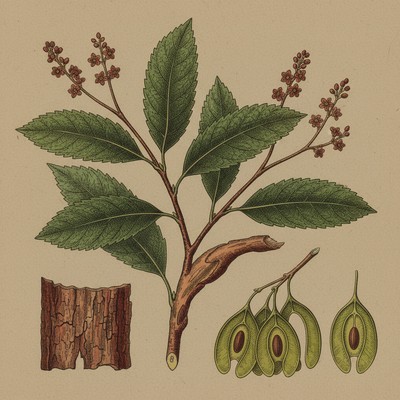
Ulmus rubraSlippery elm is an American elm whose inner bark has served as both food and medicine among Native American tribes for centuries. When mixed with water, the powdered bark forms a slick gel, which explains its name. This gel coats the throat and stomach. Herbalists therefore classify the bark as a demulcent, an herb that soothes mucous membranes, and it is traditionally used to soothe digestive upset and ease a sore throat. It was once cooked into gruel for sick people because it was nutritious and easy to digest. Before buying it, know that wild elms face pressure from overharvesting and disease. Herbalists recommend using the bark responsibly, or choosing another herb when one will serve instead.
Traditionally used for
- Soothe digestive upset and support gut lining health
- Ease sore throat and respiratory discomfort
- Support comfortable elimination
Quick facts
Pairs well with
Common questions
What does slippery elm tea taste like?
The flavor is mild and slightly sweet, but the texture is slippery. People tend to notice the mouthfeel more than the taste. Because Ulmus rubra bark is highly mucilaginous, a strong cup becomes thick and slick instead of watery, and that gel explains the common name. If the texture bothers you, capsules are another option.
How do you make slippery elm tea?
Stir powdered inner bark into hot water, then leave it to sit. It will thicken, and that is normal. Our library includes tea, infusion, decoction, and capsule preparations. You can simmer the bark to make something stronger, or choose capsules if you prefer not to drink the gel. One timing caution: take medications an hour or two beforehand, because slippery elm may slow their absorption.
Can you mix slippery elm and marshmallow root?
They are nearly interchangeable, which is one reason people blend them. Both have the same taste profile here: mild, slightly sweet, and very mucilaginous. Equal parts works, producing a thicker cup rather than a more varied flavor, because marshmallow is traditionally used to cover the same digestive and respiratory ground. Their cautions also combine. Both may slow medication absorption, so separate your pills and cup by an hour or two. Either may affect blood sugar, pregnancy requires caution with both, and marshmallow adds a breastfeeding caution.
Can you mix slippery elm and licorice?
Yes, but licorice can dominate this blend, so use less and taste as you go. Its intense licorice-like sweetness and slight bitterness easily outweigh slippery elm's mild flavor. Both are traditionally used to soothe respiratory discomfort and support digestive comfort. Most safety concerns come from licorice. It is not for long-term use and should not be used during pregnancy, or by anyone with high blood pressure, a heart or kidney condition, or low potassium. It can also interact with diuretics, blood pressure drugs, and corticosteroids.
Can you mix slippery elm and chamomile?
Both are traditionally used to support digestion. Chamomile supplies the flavor that slippery elm largely lacks: apple-like sweetness with a honeyed floral note. The blend therefore tastes mainly of chamomile, with a rounder body beneath it, and equal parts is a reasonable starting point. Anyone who reacts to ragweed, daisies, or chrysanthemums should avoid chamomile. It may interact with blood thinners and sedatives. Slippery elm may slow medication absorption, so take medications well before the tea. Pregnancy requires caution with both herbs.
Who should avoid slippery elm?
Most people tolerate slippery elm well, so the main question is timing rather than who should avoid it. It may slow medication absorption, so take prescribed medicine an hour or two before it instead of at the same time. It may also affect blood sugar, an important point if you monitor yours. Use during pregnancy calls for caution. Sourcing matters as well: wild elms face real pressure, and herbalists ask that the bark be used sparingly.
Can you grow slippery elm in containers?
No. Slippery elm is a tree, and its bark is the part used, so it is not suited to a windowsill container. You will generally need to buy it, more often from a specialty herb shop than a supermarket. Because wild elms are already under substantial pressure, choose a source that can explain where its bark came from.
Safety
Generally well-tolerated. May slow absorption of medications; take medications 1-2 hours before slippery elm. Use caution during pregnancy. May affect blood sugar. Source sustainability concerns; use responsibly.
These statements have not been evaluated by the Food and Drug Administration. This information is not intended to diagnose, treat, cure, or prevent any disease. Always consult a qualified healthcare provider before using herbs, especially if you are pregnant, nursing, taking medication, or have a medical condition.
More from the herb library
Blend Slippery Elm in the Yarrow app
Browse 100 herbs, build your shelf, and create blends from what you have.
100% Ad-Free · Some features require premium