Red Raspberry Leaf
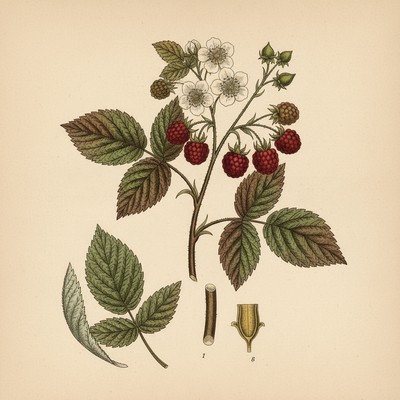
Rubus idaeusRed raspberry leaf has been known as a 'woman's herb' for centuries, especially in the context of pregnancy and childbirth. The leaves are rich in vitamins and minerals (like calcium and iron) and have a toning effect on the uterus. Midwives and herbalists often recommend red raspberry leaf tea in the second and third trimesters of pregnancy to help strengthen the uterine muscles for labor and potentially reduce complications. It also can ease menstrual cramps and support overall reproductive health. The tea has a mild, green flavor somewhat like black tea but without caffeine, making it a soothing daily tonic for women's wellness.
Traditionally used for
- Support uterine health and tone during pregnancy
- Ease menstrual cramping and discomfort
- Support reproductive wellness
Quick facts
Pairs well with
Common questions
Is red raspberry leaf tea safe during pregnancy?
The usual caution is to avoid red raspberry leaf in early pregnancy. It is generally recommended only after the first trimester, with approval from a healthcare provider. The leaf is traditionally used to support uterine health and tone during pregnancy, and it is usually well tolerated, but those points do not replace getting approval. Your provider understands your health history and other medications. Talk with them before drinking your first cup.
Can you mix red raspberry leaf and nettle?
These two make a nutritive blend. Nettle is traditionally used to support overall vitality and nutritive wellness, while raspberry leaves are rich in vitamins and minerals such as calcium and iron. Their flavors work together as well, with grassy, spinach-like nettle beneath the mild, slightly fruity leaf. Equal parts is a reasonable starting point. One caution matters because this blend often circulates as a pregnancy tea: nettle's own guidance says to avoid it during pregnancy because it may stimulate the uterus. Nettle may also interact with blood pressure medications, blood thinners, diuretics, and blood sugar medications.
Can you mix red raspberry leaf and vitex (chaste tree)?
They mostly land in the same jar because both belong to the women's health category. Vitex is traditionally used to support menstrual cycle regularity and hormone balance, while raspberry leaf is traditionally used to ease menstrual cramping and discomfort. Since vitex tastes bitter, pungent, and peppery, begin with less of that stronger herb. Nearly all the safety caution comes from vitex: avoid it during pregnancy and while breastfeeding, skip it with hormone-sensitive conditions, and check first if you take birth control pills, hormone replacement therapy, or dopamine-related medications.
What does red raspberry leaf tea taste like?
The flavor is gentler than its name implies. A light fruitiness comes through, but it is nothing like jam, and the overall character is green and similar to black tea, but without caffeine. Rubus idaeus is neutral enough for daily drinking and mild enough to sit beneath a stronger herb without competing with it.
How do you make red raspberry leaf tea?
Put dried leaf in hot water and cover the cup as it steeps. Taste it along the way. A longer infusion draws more from the leaf, and its mild character means the extra time is not punishing as it can be with a bitter herb. Dried leaf is easy to find. A tincture is the other common preparation when daily cups do not appeal to you.
Who should avoid red raspberry leaf?
Avoid it during early pregnancy. After the first trimester, it is typically used only with a healthcare provider's approval, so pregnancy is less an absolute no than a discussion to have before starting. Anyone who takes medication for blood sugar or high blood pressure should ask too, because red raspberry leaf may interact with both. For everyone else, it is generally well tolerated.
Can you grow red raspberry leaf in containers?
Yes. It grows well in a container, and because you harvest the leaf for tea, the plant earns its space even if it never produces fruit. Dried leaf is also easy to find in shops, so growing it yourself is a matter of preference, not supply.
Safety
Avoid during early pregnancy; typically recommended after first trimester with healthcare provider approval. May interact with medications for diabetes and high blood pressure. Generally well-tolerated but consult provider before use during pregnancy.
These statements have not been evaluated by the Food and Drug Administration. This information is not intended to diagnose, treat, cure, or prevent any disease. Always consult a qualified healthcare provider before using herbs, especially if you are pregnant, nursing, taking medication, or have a medical condition.
More from the herb library
Blend Red Raspberry Leaf in the Yarrow app
Browse 100 herbs, build your shelf, and create blends from what you have.
100% Ad-Free · Some features require premium