Fenugreek
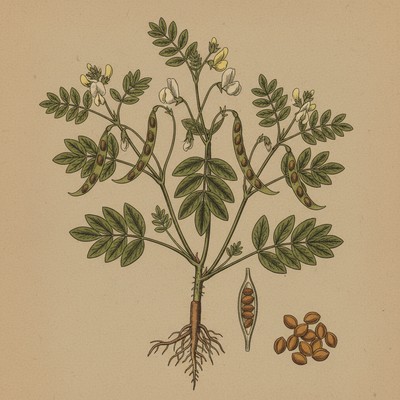
Trigonella foenum-graecumFenugreek is an ancient herb as well as a spice. Its seeds have been found in Egyptian tombs, and the plant appears throughout Indian, Middle Eastern, and North African cooking. Once cooked, the seeds give off a clear maple syrup aroma. Eating fenugreek can give sweat and urine that same smell. It is best known as a galactagogue, a plant traditionally used to support healthy lactation in nursing mothers, most often taken in capsules or as tea. Fenugreek is also traditionally used to support digestive comfort and appetite. Its slightly bitter, mucilaginous seeds coat the stomach. Fenugreek is generally well tolerated when used as a culinary spice. More care is needed with larger amounts because they may affect blood sugar and blood clotting. Pregnancy calls for a separate caution: avoid fenugreek during pregnancy because it may stimulate the uterus.
Traditionally used for
- Support healthy lactation in nursing mothers
- Support healthy blood sugar balance
- Support digestive comfort and appetite
Quick facts
Pairs well with
Common questions
What is fenugreek good for?
Trigonella foenum-graecum belongs in two parts of the herbal library: digestion and women's health. The seeds are traditionally used to support digestive comfort and appetite, as well as healthy lactation in nursing mothers. Preparations include tea, a longer decoction, an infusion, and capsules. Despite what search results may suggest, weight loss is not listed here among its recorded traditional uses.
What is fenugreek used for while breastfeeding?
Many people first encounter fenugreek while nursing. It is the classic galactagogue, which means a plant traditionally used to support healthy lactation, and it is commonly taken as capsules or tea. Be ready for its aroma. Fenugreek may make sweat and urine smell like maple syrup, an effect that can be surprising. It may also affect blood sugar and blood clotting. If you take medication for either, speak with your healthcare provider first.
What does fenugreek taste like?
Maple is the first flavor people tend to notice, especially after the seeds are cooked. Beneath that note, fenugreek is bitter and nutty. It tastes more like a kitchen spice than a dessert, fitting its place in Indian, Middle Eastern, and North African cooking. Fenugreek alone makes a heavy cup, so it is usually blended with something sweeter.
Can you mix fenugreek and fennel?
Yes. On paper, this is the pairing that makes the most sense. Fenugreek and fennel are both traditionally used to support healthy lactation, and both belong in the digestion category. There, fennel is usually reached for with gas and bloating. Its sweet licorice flavor also softens much of fenugreek's bitterness. Equal parts offer a good starting point. Keep both out of a pregnancy cup: fennel is avoided in therapeutic doses, while fenugreek may stimulate the uterus. Fennel may also interact with birth control pills and estrogen medications.
Can you mix fenugreek and marshmallow root?
Fenugreek and marshmallow root are both mucilaginous, so this blend is thick and coating rather than bright. Both are traditionally used to support digestive comfort, while marshmallow is also traditionally used to soothe the stomach lining. Its gentle sweetness softens the bitter edge. Marshmallow brings two cautions: it may slow medication absorption, so take your medication one to two hours before the tea, and it warrants care during pregnancy and breastfeeding. Both herbs may affect blood sugar, and fenugreek does not belong in a pregnancy cup.
Who should avoid fenugreek?
Anyone who is pregnant should avoid it. Fenugreek may stimulate the uterus, so leave it off the list during those months. Allergies to peanuts or chickpeas are another clear reason for caution. Fenugreek may also affect blood sugar and blood clotting. If you take blood-thinning medication or anything used to manage blood sugar, ask your healthcare provider before starting it.
Can you grow fenugreek in containers?
Fenugreek grows well in a pot. Keep in mind that the seed is the part used, so the goal is to produce seeds, not leaves to snip throughout the season. Since dried fenugreek is readily available, growing it in a container is more of a nice-to-have.
Safety
May affect blood sugar and blood clotting. Avoid during pregnancy (may stimulate uterus). May cause maple syrup odor in body fluids. May interact with diabetes and blood-thinning medications. Those with peanut or chickpea allergies should use caution.
These statements have not been evaluated by the Food and Drug Administration. This information is not intended to diagnose, treat, cure, or prevent any disease. Always consult a qualified healthcare provider before using herbs, especially if you are pregnant, nursing, taking medication, or have a medical condition.
More from the herb library
Blend Fenugreek in the Yarrow app
Browse 100 herbs, build your shelf, and create blends from what you have.
100% Ad-Free · Some features require premium